Tick, Tock, Buy: What's Really Happening in Your Brain During a Flash Sale
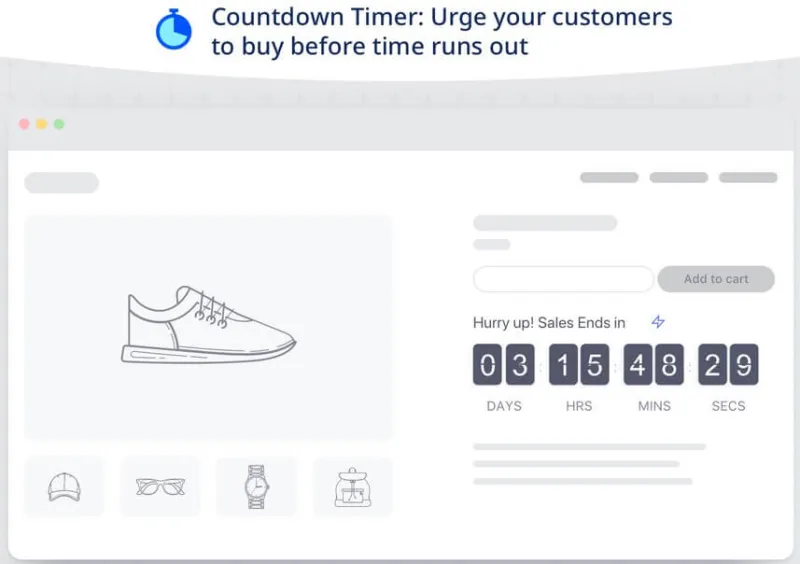
Photo: countdown timer online shopping cart stress urgency, via www.digitaleagles.com.au
You've been there. You're casually scrolling, minding your own business, and suddenly a banner appears: "67% OFF — ONLY 8 MINUTES LEFT." Your pulse ticks up. Your cursor drifts toward the "Add to Cart" button. And before your rational brain can say "do you actually need a sous vide machine?" — you've already typed in your credit card number.
Welcome to the beautiful, slightly manipulative world of flash sales.
Here at 10 Minute Deals, we live and breathe limited-time offers. We love a genuinely great deal as much as you do. But we also believe that an informed shopper is a powerful shopper. So let's pull back the curtain on what's actually happening inside your head when that timer starts counting down — and how to tell the difference between a deal worth sprinting for and one designed purely to make you spend money you didn't plan to.
Your Brain on Scarcity: The Neuroscience You Didn't Ask For
Human beings are hardwired to place higher value on things that are rare or disappearing. This isn't a flaw — it's an ancient survival mechanism. Back when food and resources were genuinely scarce, the ability to act fast on limited opportunities kept our ancestors alive.
Fast-forward a few thousand years, and retailers have figured out how to weaponize that instinct.
When you see a flash sale countdown, your brain's amygdala — the emotional processing center — fires up. At the same time, the prefrontal cortex, which handles logical reasoning and long-term planning, gets partially sidelined. Researchers call this "cognitive tunneling." Your attention narrows. You stop thinking about whether you need the item and start thinking only about whether you'll miss it.
This is why flash sales work even on people who consider themselves disciplined, budget-conscious shoppers. It's not a willpower problem. It's biology.
FOMO Is a Feature, Not a Bug (For Retailers)
Fear of missing out — FOMO — has been studied extensively in behavioral economics. Dr. Dan Ariely, one of the field's most prominent voices, has documented how the pain of a perceived loss consistently outweighs the pleasure of an equivalent gain. In plain English: losing a $50 deal feels worse than finding a $50 deal feels good.
Retailers exploit this asymmetry brilliantly. Phrases like "Only 3 left in stock," "Selling fast," and "Today only" aren't just informational — they're emotional accelerants. Combined with a visible countdown timer, they create what psychologists call an artificial urgency loop: the sense that you are in a race, that others are competing for the same item, and that hesitation equals failure.
Amazon's Lightning Deals are a textbook example. The progress bar showing how much of the deal has been "claimed" is psychological gold. Even if you weren't interested in the product thirty seconds ago, watching that bar fill up makes your brain treat it as a competition.
Social Proof Piles On
Scarcity psychology doesn't operate in isolation. It gets turbo-charged by social proof — the tendency to assume that if other people are doing something, it must be the right move. When a product page says "142 people are viewing this right now," you're not just racing against the clock. You're racing against a crowd.
This is why flash sale pages often feature real-time purchase notifications ("Sarah from Denver just bought this!"), review counts, and bestseller badges. Every one of those elements is designed to confirm: other smart people are buying this, so you should too.
Combine scarcity + urgency + social proof and you've got a purchasing pressure trifecta that can override even the most carefully constructed budget.
The Sunk Cost Trap Inside Your Shopping Cart
Here's a sneaky one. Many flash sale platforms require you to "claim" a deal before you check out — dropping it into a cart that holds it for a limited window. Once you've done that, you've made a micro-commitment. Behavioral economists call this the sunk cost effect: because you've already invested the effort of claiming the deal, abandoning it feels like a loss.
You haven't spent a dime yet, but your brain has already started grieving the deal you're about to "lose." That's a remarkably effective way to push someone across the finish line.
How to Tell a Real Deal from a Psychological Trap
None of this means flash sales are inherently evil. Plenty of them are genuinely outstanding opportunities — and that's literally why we built 10 Minute Deals. But knowing the tricks helps you use flash sales rather than be used by them. Here's a practical framework:
1. Check the Price History First
Tools like CamelCamelCamel (for Amazon) or browser extensions like Honey and Capital One Shopping let you see whether a product's "original price" is real or inflated. A 60% discount off a price that was only listed for two days last November isn't much of a discount.
2. Apply the 24-Hour Rule — Modified
The classic personal finance advice is to wait 24 hours before any impulse purchase. For flash sales, you obviously can't wait that long — but you can ask yourself: "Was I planning to buy something like this before I saw this deal?" If the answer is no, the deal found you, not the other way around.
3. Calculate the Real Cost
A $200 item at 50% off is still $100. Is $100 in your budget right now? The percentage saved is psychologically seductive, but the dollar amount leaving your account is what matters.
4. Watch for Vague Scarcity
Legitimate scarcity is specific: "4 units left." Manipulative scarcity is vague: "Limited quantities available." If a retailer won't tell you exactly how limited the supply is, be skeptical.
5. Trust Curated Deal Sources
This is where a site like 10 Minute Deals earns its keep. We vet offers before they hit our feed, so you're not starting from scratch every time a countdown timer appears. Curated deal aggregation cuts through the noise and lets you focus your fast-decision energy on offers that have already passed a quality filter.
The Bottom Line: Speed and Smarts Can Coexist
Flash sales are a legitimate and exciting way to score real savings — but they're also one of the most psychologically sophisticated sales tools ever developed. The countdown timer, the scarcity messaging, the social proof widgets: none of that is accidental. It's all engineered to compress your decision-making window and reduce the chance that you'll talk yourself out of buying.
The good news? Understanding the mechanism is most of the battle. Once you recognize the emotional levers being pulled, you can engage with flash sales on your own terms — grabbing the ones that genuinely serve your needs and walking away from the ones that are just very expensive FOMO.
Shop fast. Shop smart. And let the clock work for you, not against you.