Retailers Know Something You Don't: The Hidden Science Behind Flash Sale Spending

Photo: Person Lin, CC BY-SA 2.0, via Wikimedia Commons
You've been there. A timer ticks down in the corner of your screen. A banner screams "72% OFF — ONLY 3 LEFT!" Your pulse quickens. You grab your credit card. And somewhere in a corporate analytics dashboard, a data scientist smiles.
Flash sales are one of retail's most profitable inventions — not because they save you money, but because they're precision-engineered to make you think they do. At 10 Minute Deals, we live and breathe limited-time offers, so we know the difference between a genuine steal and a carefully constructed illusion. Let's pull back the curtain.
The Markup Before the Markdown
Here's a dirty little secret the retail industry doesn't advertise: the "original price" shown during a flash sale is often not the price anyone ever actually paid. The Federal Trade Commission has guidelines about this — technically, a reference price should reflect what an item was genuinely sold for in the recent past — but enforcement is inconsistent, and retailers exploit that gray zone aggressively.
A common trick is called "anchoring inflation." A retailer lists a blender at $120 for a few weeks (selling almost none at that price), then drops it to $59 during a flash event. Suddenly it looks like a $61 savings. In reality, the competitive market price was always around $55. You're not saving $61. You're spending $4 more than you needed to while feeling like a genius.
Price tracking tools like CamelCamelCamel (for Amazon products) or the browser extension Honey can show you a product's actual price history. If the "sale" price is the price it's been sitting at for six months, that's your answer.
Artificial Scarcity Is a Full-Time Job
"Only 2 left in stock!" is one of the most effective lines in e-commerce — and one of the least reliable. Scarcity triggers a primal fear of missing out that overrides rational thinking. Behavioral economists call this "loss aversion," and it's powerful enough to make people pay more for something they weren't even sure they wanted five minutes ago.
The catch? Inventory warnings are almost never transparent. A retailer might have 2,000 units in a warehouse but display "Only 5 left" on a product page because their algorithm determined that scarcity messaging increases conversion by 30% for that category. You're not racing other shoppers. You're racing a number a marketing team picked.
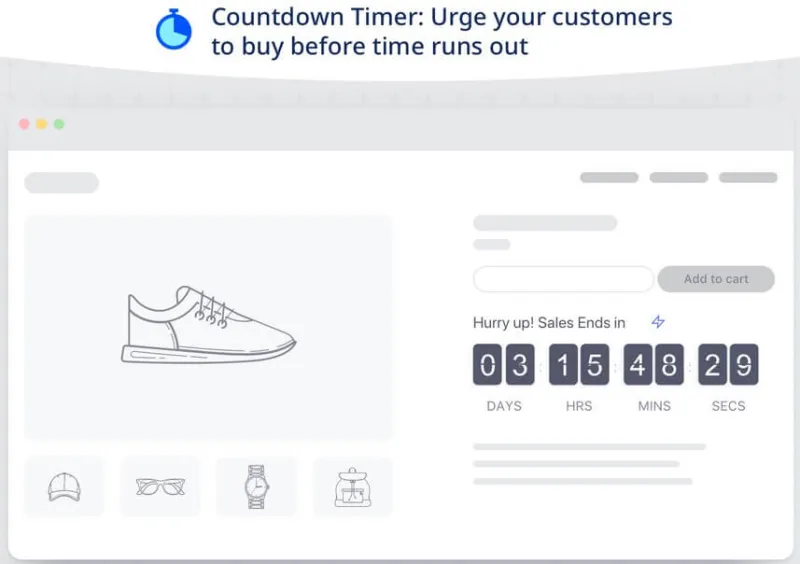
Countdown timers work the same way. Research from the Journal of Consumer Psychology has shown that time pressure dramatically reduces the quality of purchase decisions. When the clock is running, your brain shifts from "do I need this?" to "how do I get this before it's gone?" — which is exactly the cognitive shift retailers are paying engineers to manufacture.
The Bundle Trap
Flash sales love a good bundle. "Buy the shampoo, get the conditioner and a travel bag — all for $34, a $78 value!" Sounds incredible. But bundles are masterclasses in value obscuring. When you can't easily price out individual components, you lose your ability to comparison shop. The travel bag might be worth $3. The conditioner might be available solo for $6. Suddenly that "$78 value" looks a lot more like a $22 collection of things you half-wanted.
Always try to price out bundle components individually before committing. If even one item isn't something you'd buy on its own, you're not saving — you're just spending more than you planned.
How to Actually Spot a Genuine Deal
None of this means flash sales are worthless. Real deals exist — you just need a system to find them instead of feeling them.
Check the price history first. Before any flash purchase, spend 60 seconds on a price-tracking site. If the "sale" price is the item's normal price, walk away.
Ask yourself the pre-sale question. Would you have wanted this item yesterday, before you saw the sale? If the answer is no, manufactured urgency is doing the work for you.
Ignore the percentage, focus on the dollar amount. "80% off" on a $10 item is $8 saved. "15% off" on a $400 appliance you actually need is $60 saved. Retailers know big percentages feel exciting regardless of the actual savings.
Read the return policy before the product description. Flash sale items are frequently excluded from standard return windows. If you can't return it, the risk profile of the purchase changes entirely.
Wait 10 minutes. Fittingly for a site called 10 Minute Deals — if you still want something after a 10-minute pause, it's more likely a genuine desire than an impulse. Most flash sale windows are long enough to survive a coffee break.
The Bigger Picture
Retailers aren't evil for using these tactics — they're rational actors optimizing for revenue. But that means you need to be an equally rational actor optimizing for value. The power dynamic in a flash sale only favors the retailer when you're operating on emotion.
The shoppers who consistently win at flash sales — and we've talked to plenty of them — treat deal-hunting like a discipline, not a sport. They have price alerts set. They know their actual budget before the sale starts. They've already decided which categories are worth buying discounted versus which ones require more research.
Flash deals can absolutely deliver real savings. But the ones you find on purpose, with a clear head and a price history in hand, are worth ten times the ones you stumble into at 11 PM with a countdown timer screaming at you.
Shop the clock. Don't let it shop you.