Real Cuts vs. Smoke and Mirrors: Which Flash Sale Categories Actually Save You Money

Photo: Marinelson Almeida - Traveling through Brazil from Niteroi, Brasil, CC BY 2.0, via Wikimedia Commons
A 70% off tag is only meaningful if the original price was real. That's the uncomfortable truth sitting at the center of the flash sale economy, and it's one that retailers in certain categories have figured out how to exploit very, very well.
Not all flash deals are scams. Some of them are genuinely exceptional — prices that reflect real margin compression, overstock clearance, or competitive pressure that forces brands to drop below their usual floor. But other "deals" are theatrical. The original price was inflated specifically to make the sale price look dramatic.
Knowing which category is which is worth real money. Here's how the major flash sale sectors actually stack up.
Electronics: The Most Legitimate Deals in the Game
If there's one category where flash sales tend to deliver genuine savings, it's consumer electronics — with some important caveats.
Electronics have a well-documented depreciation curve. A 65-inch 4K TV that launched at $1,200 two years ago has a very different market value today. Manufacturers and retailers need to move older inventory to make room for new model cycles, which creates real incentive to discount aggressively.
Events like Amazon's Prime Day, Best Buy's flash sale windows, and Walmart's Rollback events on electronics tend to produce legitimate price drops — often 20% to 40% below what those items were selling for in the weeks prior. Tools like CamelCamelCamel can verify this: the historical pricing data on electronics frequently confirms that sale prices represent genuine lows, not manufactured ones.
The caveat? Be careful with lesser-known brands running their own flash sales. A no-name smart TV "marked down from $899 to $299" deserves serious skepticism. The original price may have never been a real selling price — it's a reference anchor designed to make the sale price feel like a steal.
Bottom line for electronics: Stick to name brands at major retailers during verifiable sale events. The discounts are usually real, and the historical price data is easy to check.
Fashion and Apparel: The Category Most Likely to Mislead You
Fashion is where the illusion of savings is most refined. The retail clothing industry has a long, well-documented history of "original prices" that were never meant to be actual selling prices. They exist almost entirely as anchors.
The Federal Trade Commission has guidelines around this, but enforcement is inconsistent. The result is a category where a sweater "marked down from $120 to $39" may have been manufactured with a $39 price point in mind from day one. The $120 tag is the costume.
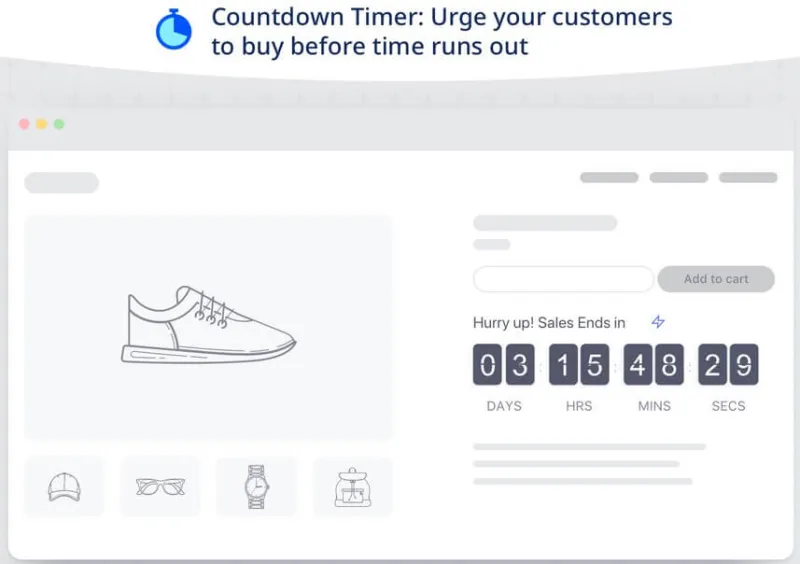
This is especially common in fast fashion and DTC (direct-to-consumer) brands that run near-constant flash sales. If a brand's website always has a countdown timer and always has 40%-60% off, that's not a flash sale — that's just their pricing strategy wearing a costume.
There are exceptions. End-of-season clearance events at major department stores — Nordstrom's Anniversary Sale, Macy's flash events, Gap's end-of-season blowouts — often move genuine overstock at real discounts. The closer to the end of a fashion season, the more likely the discount reflects actual inventory pressure rather than theater.
Bottom line for fashion: Be deeply skeptical of brands that always seem to be on sale. Look for end-of-season timing and major department store clearance events, where the discount reflects real inventory dynamics rather than manufactured urgency.
Home Goods and Furniture: Mixed Signals, Genuine Opportunities
The home goods category sits somewhere in the middle. Furniture and large home items have notoriously high suggested retail prices, and the industry has historically used those inflated numbers to justify perpetual "sales." Wayfair, in particular, has faced criticism for pricing structures that make it difficult to determine what a fair market price actually is.
That said, flash sales on home goods can produce real value under specific conditions. Overstock situations — when a retailer has too much of a particular item in a warehouse — create genuine incentive to cut price fast. Seasonal transitions (summer outdoor furniture going into fall, holiday decor in January) are also moments when discounts reflect real supply-demand imbalances rather than pricing theater.
Smaller kitchen appliances tend to follow the electronics model more closely, with legitimate discounts tied to model cycles and competitive pressure. A KitchenAid mixer or an Instant Pot on sale during a major retail event is usually a genuinely good price.
Big-ticket furniture, on the other hand, is where the markup games are most aggressive. A sectional sofa "on sale for $1,800, originally $3,600" is almost certainly not a 50% discount from a real price. The $3,600 figure is architectural — it exists to make $1,800 feel like a victory.
Bottom line for home goods: Smaller appliances and seasonal items tend to offer real deals. Large furniture discounts should be treated with significant skepticism unless you can find comparable products at other retailers for price comparison.
Travel: The Most Volatile Category — and the Most Rewarding When It Clicks
Travel deals operate under completely different economics than retail. Airlines and hotels have perishable inventory — an empty seat on a Tuesday flight or an unbooked hotel room on a Wednesday night is revenue that can never be recovered. That creates genuine, structural incentive to discount aggressively when inventory isn't moving.
This is why legitimate flash sales in travel tend to be the real thing. An airline running a 48-hour seat sale is genuinely trying to fill planes. A hotel offering a last-minute flash rate is genuinely trying to avoid empty rooms. The discounts are real because the economics demand them.
The catch is flexibility. Travel flash deals almost always require you to move fast and be adaptable on dates, destinations, or both. The best deals rarely align with your preferred travel window. If you can be flexible, the savings are genuine — often 30% to 50% below standard booking prices on the same routes or properties.
Beware of "flash sales" on travel packages that bundle flights and hotels with opaque pricing. The individual components may not be discounted at all — the bundling just makes comparison difficult.
Bottom line for travel: Among all flash sale categories, travel offers some of the most legitimate discounts available — but only if you're flexible. Rigid travel plans and flash deal economics don't mix well.
The Pattern Worth Remembering
Across all these categories, one pattern holds up: the more perishable or time-sensitive the inventory, the more likely the flash sale reflects a real price drop. Airlines can't sell yesterday's seats. Electronics lose value as new models arrive. End-of-season clothing has nowhere to go.
Conversely, the more a retailer can control the "original price" narrative — and the more perpetually "on sale" their products seem — the more skeptical you should be. The countdown timer is a tool. Whether it's pointing at a genuine deal or a manufactured one is the question worth asking every single time.